Key points
- Most rights and duties apply to everyone living in France. Some are reserved for French citizens: the right to vote, participation in national defence and serving on a jury at the assize court (jury d'assises).
- Fundamental rights are guaranteed by the 1958 Constitution, the 1789 Declaration of the Rights of Man and of the Citizen (DDHC), the 1946 preamble, the 2004 Environmental Charter and the European Convention on Human Rights.
- Three categories of offences: minor offences (police court), misdemeanours (criminal court, punishable by up to 10 years in prison) and felonies (assize court or criminal court, punishable by life imprisonment).
- All residents help fund public services: every year, any adult who is no longer included in their parents' tax household must declare their income.
- Voting is not compulsory, but it is a civic duty. Failing to help someone in danger is a criminal offence.
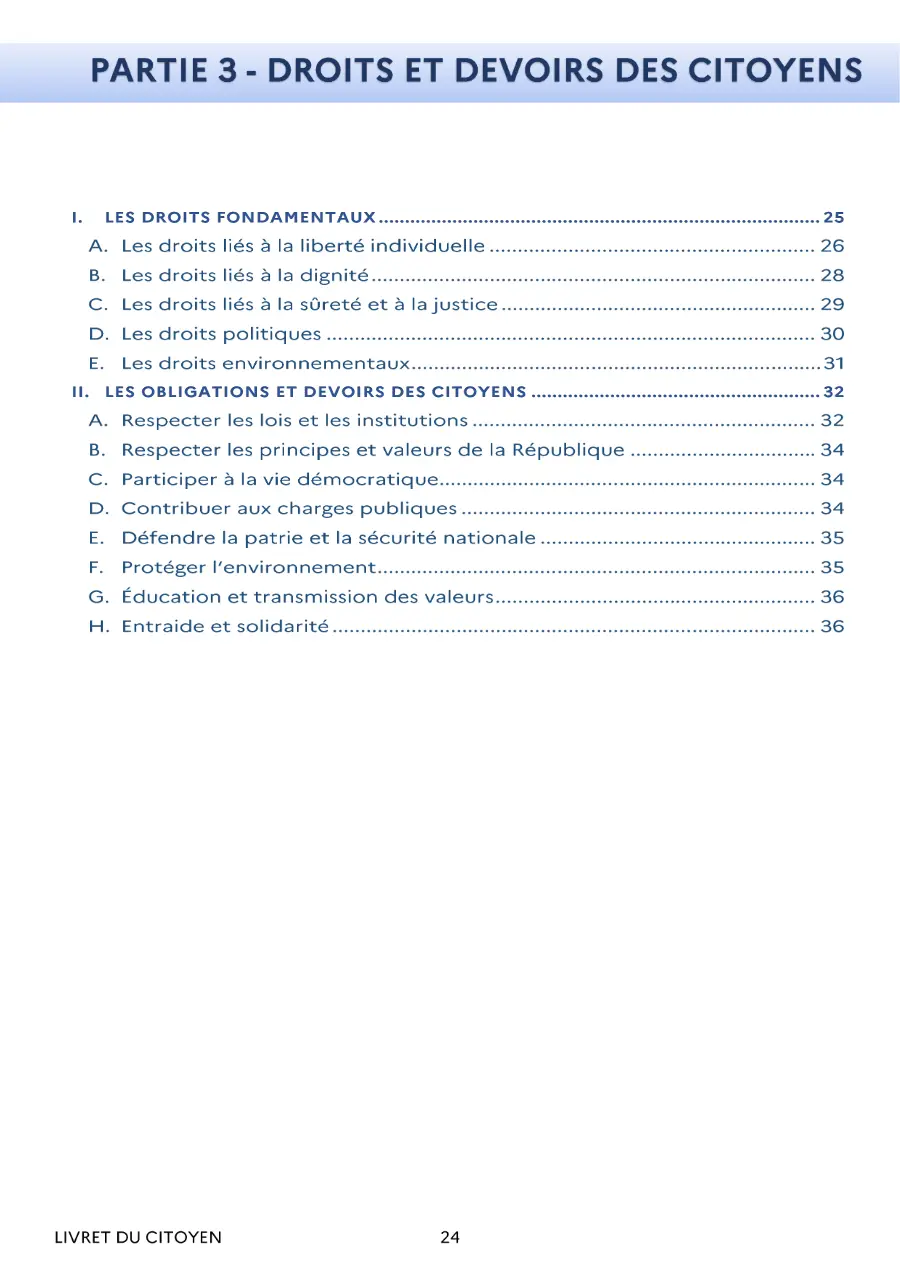
Part 3 of the Citizen’s Handbook (Livret du citoyen) (pages 24 to 36) presents fundamental rights, followed by the duties that go with them. It corresponds to the «Rights and duties» topic in the civic exam. This summary follows the order of the handbook; if in doubt, the official handbook is the authoritative source.
Fundamental rights
Being a citizen of a country means having its nationality, with rights and duties. Some rights are reserved for French citizens, such as the right to vote or to take part in national defence and serve on a jury at the assize court (jury d’assises). But most apply to everyone living in France, whatever their nationality or status. The law applies to everyone: the Civil Code (Code civil), enacted in 1804 by Napoleon Bonaparte, sets out the rules governing relations between people, while the Criminal Code (Code pénal) defines offences and their penalties.
Fundamental rights are guaranteed mainly by the Constitution of the Fifth Republic, the 1789 Declaration of the Rights of Man and of the Citizen (Déclaration des droits de l’homme et du citoyen), the preamble to the 1946 Constitution, the 2004 Environmental Charter and international agreements ratified by France, such as the European Convention on Human Rights (Convention européenne des droits de l’homme). All laws can be found on legifrance.gouv.fr, and vie-publique.fr explains the rules and institutions.
Individual freedoms
- Freedom of choice: everyone can decide how to live, who to have relationships with and what plans to make, within the limits of the law.
- Freedom of thought, conscience and religion: this freedom is absolute. Everyone can believe in one or more gods, have no religious beliefs or change their religion, and freely join a political party. People in detention retain their freedom of worship.
- Freedom of expression: everyone can express their views, within the limits of the law. Calls for violence, insults, threats and discriminatory remarks are prohibited, including on social media.
- Freedom of the press (Article 11 of the DDHC): journalists can report freely, including on institutions, public figures and religions. They must not defame, incite people to commit crimes or deny crimes against humanity.
- Freedom of movement: everyone can travel freely in France and the European Union. A minor travelling without their parents needs a travel authorisation to leave the country. The Schengen Area, with no checks at internal borders, includes 23 EU countries and 4 associated countries (Norway, Iceland, Switzerland and Liechtenstein). Exceptions: people in detention, non-EU nationals subject to entry rules (a visa, followed by a residence permit required when the visa expires), and exceptional crises such as a state of emergency.
Rights related to dignity
- Respect for private life: privacy, medical confidentiality and the right to one’s image. It is prohibited to photograph, film or record someone without their consent in a private place. If this right is violated, you can file a complaint with the police or gendarmerie.
- Human dignity (1946 preamble): a person must never be treated as an object. The Charter of Fundamental Rights of the European Union lists five rights: dignity, the right to life, the right to the integrity of the person, the prohibition of torture, and the prohibition of slavery and forced labour. Making someone work without paying them violates their dignity.
- The right to control your own body: rape, mutilation, forced sterilisation and female genital mutilation are prohibited. Contraception is guaranteed, including for minors. Vaccination is compulsory for children, but everyone can refuse treatment. Since 8 March 2024, the freedom to have an abortion (IVG) is guaranteed by the Constitution. The Bioethics Act of 2 August 2021 gives all women access to assisted reproduction (PMA).
Rights related to security and justice
- The right to security: no one can be arrested or imprisoned without a legal reason, and every deprivation of liberty is reviewed by a judge. While in police custody, a person is informed of the reasons and of their rights: to remain silent, to have a lawyer and to notify someone close to them.
- The right to justice: everyone has the right to a fair trial before independent judges. The presumption of innocence applies until a final conviction has been issued, and penalties must be set out in law and be proportionate.
- Help to access justice: legal aid (the state pays the lawyer for people on low incomes), the Defender of Rights (Défenseur des droits) (created in 2011, this body acts in cases of disputes with a public authority or discrimination), and justice and law centres, which provide free advice.
Political rights
- Voting and standing for election, the foundations of democracy (see part 2).
- Freedom of assembly: people are free to gather peacefully, but the mayor or prefecture representative may restrict this if there is a risk to public order, subject to review by a judge.
- Freedom to demonstrate: a demonstration must be notified to the authorities in advance, with its route and organisers.
- Freedom of association: the Law of 1 July 1901 allows you to set up an association or join one. The state can dissolve an association that does not respect republican principles.
Environmental rights
Everyone has the right to live in an environment that is balanced and respectful of health. This right is recognised in the 2004 Environmental Charter, which is part of the Constitution.
Citizens’ obligations and duties
Respecting the laws and institutions
Everyone living in France must obey the law. The judge ensures that it is applied and imposes the penalties provided for.
| Offence | Examples | Penalty | Tried by |
|---|---|---|---|
| Minor offence (the least serious) | Speeding, disturbing the peace at night | Fine, no prison sentence | The police court |
| Misdemeanour | Theft, tax fraud, misuse of company assets, bullying, sexual assault, involuntary manslaughter | Fine of at least 3 750 € and up to 10 years in prison | The criminal court |
| Crime (the most serious) | Armed robbery, rape, murder, premeditated murder, terrorism | Criminal imprisonment, up to life imprisonment | The assize court or the criminal court |
Respecting institutions means respecting public officials, elected representatives and judges. Attacks on people carrying out a public service role (law enforcement officers, judges, teachers) are punished more severely, and insulting them is punishable (article 433-5 of the Penal Code). Refusing to obey a police officer or gendarme is a misdemeanour. Insulting the flag or the national anthem is punishable, and court decisions apply to everyone. Some serious convictions lead to deprivation of civic rights: the person can no longer vote or stand for election for several years.
Respect the principles and values of the Republic
Being French means sharing the values of liberty, equality and fraternity and respecting them in everyday life (see part 1).
Take part in democratic life
Voting is not compulsory in France, but it is a civic duty: it gives elected representatives their legitimacy. The election results apply to everyone, whatever their opinions.
Contribute to public spending
Funding public services is a duty set out in article 13 of the Declaration of the Rights of Man and of the Citizen (DDHC): “for the maintenance of the public force and for the expenses of administration, a common contribution is indispensable”. All residents, not just French citizens, contribute. Every year, every adult living in France who is no longer part of their parents’ tax household must declare all their income and pay their taxes. A false declaration may be penalised.
Defend the country
Defence relies on a professional army and nuclear deterrence. Compulsory military service has not existed since 1997. From the age of 16, young French people must register at the town hall to take part in the Defence and Citizenship Day (Journée défense et citoyenneté, JDC). Since 1 January 2026, an 8-month voluntary military service has been available to young people aged 18 to 25, whether French or foreign, who are not in employment. There are also reserve forces that people can join: military, police, civic and health reserves. In the event of a crisis or war, any citizen may be called on to defend the country.
Protect the environment
Since 2004, the Environmental Charter (article 2) has required everyone to “take part in preserving and improving the environment”. Practical steps are described in part 5.
Educate children and pass on values
Education is compulsory from the age of 3 to 16; parents who do not send their child to school may face legal proceedings. Parents also pass on the values of the Republic to their children. Foreign parents undertake to give their children an education that respects these values and to support them as they learn French (article 20 of the law of 26 January 2024).
Help one another
Helping one another is part of fraternity. The law requires you to help a person in danger if you can do so without risking your life: failing to help a person in danger is a misdemeanour. If you witness a serious accident, you must call the emergency services. Beyond what the law requires, getting involved in an association helps strengthen community spirit.
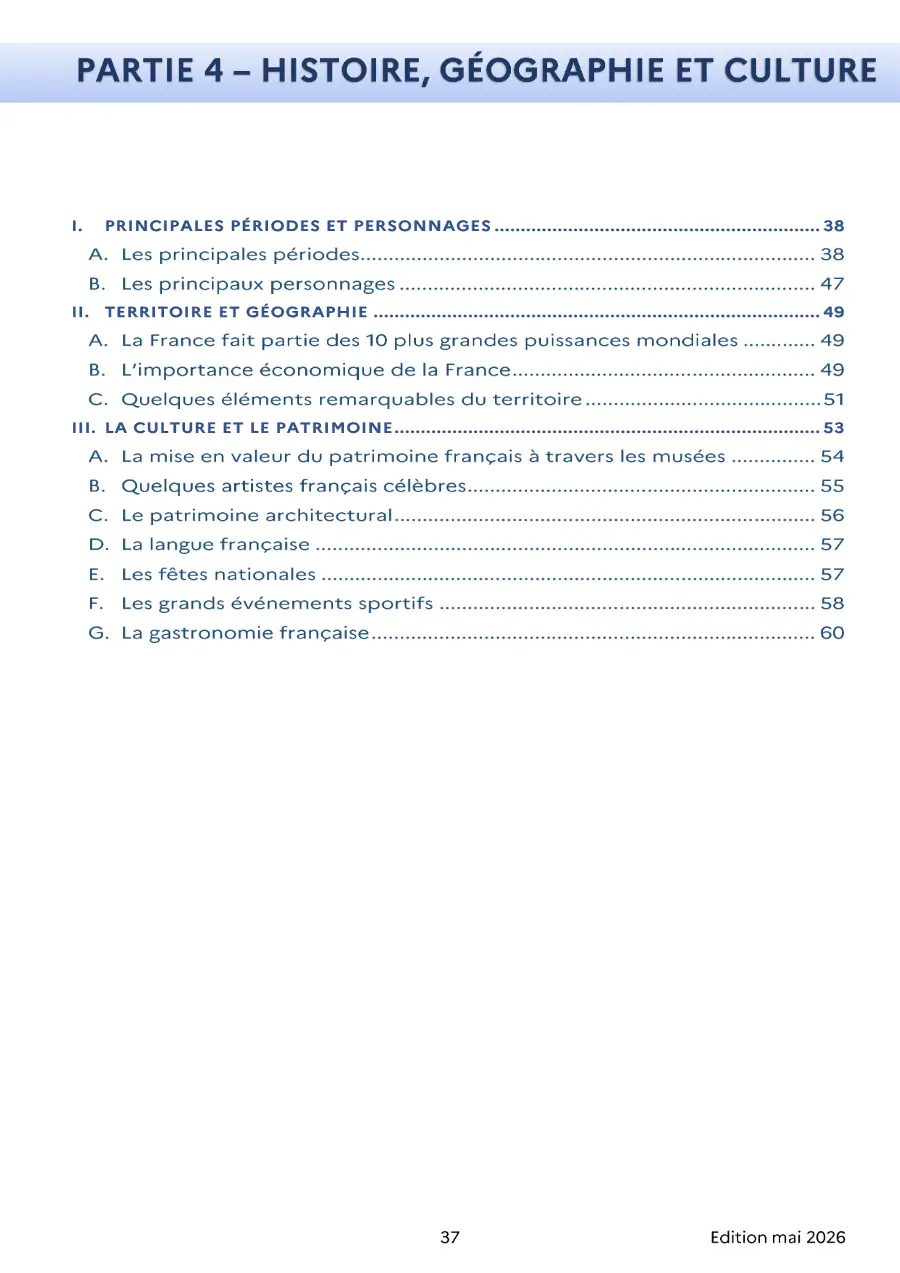
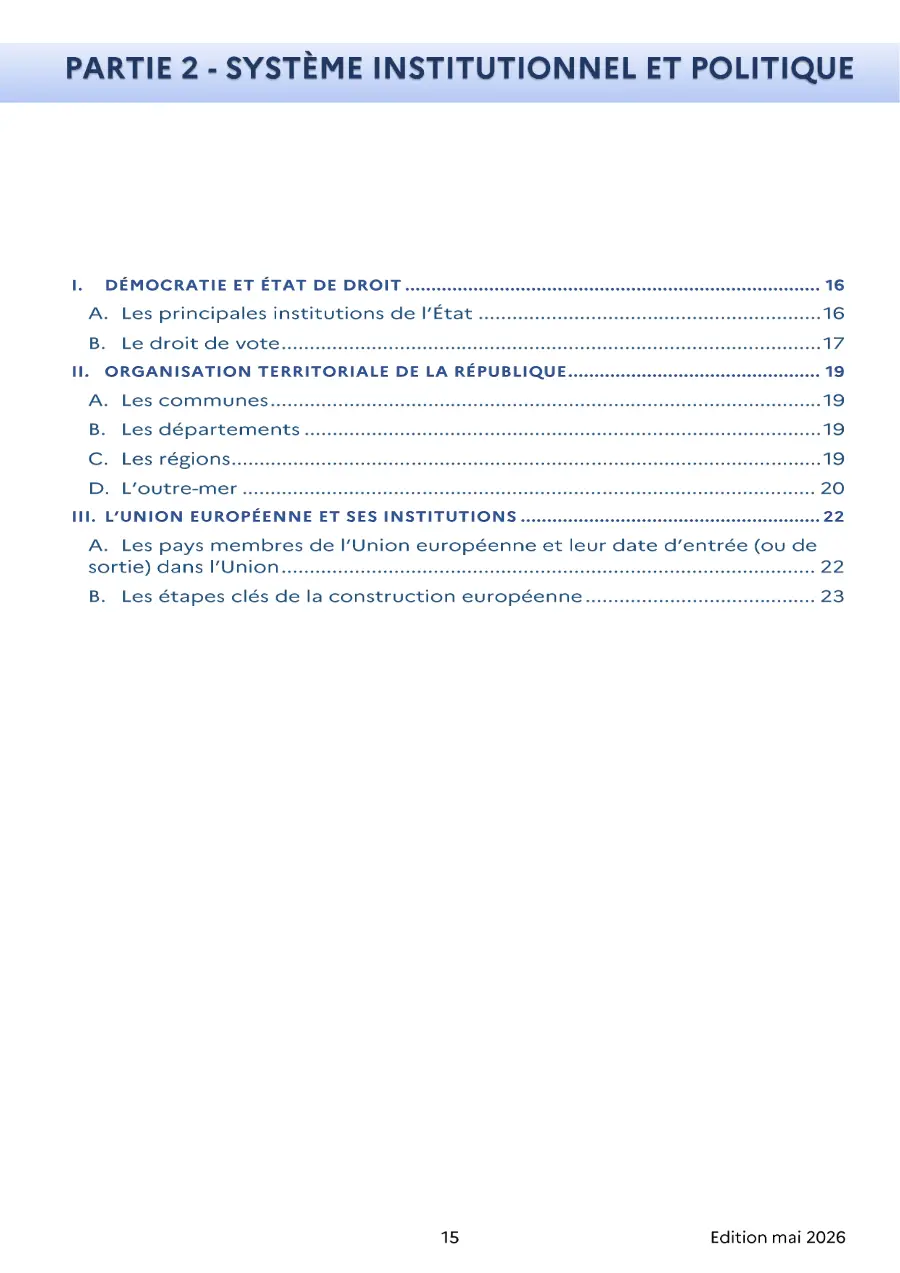
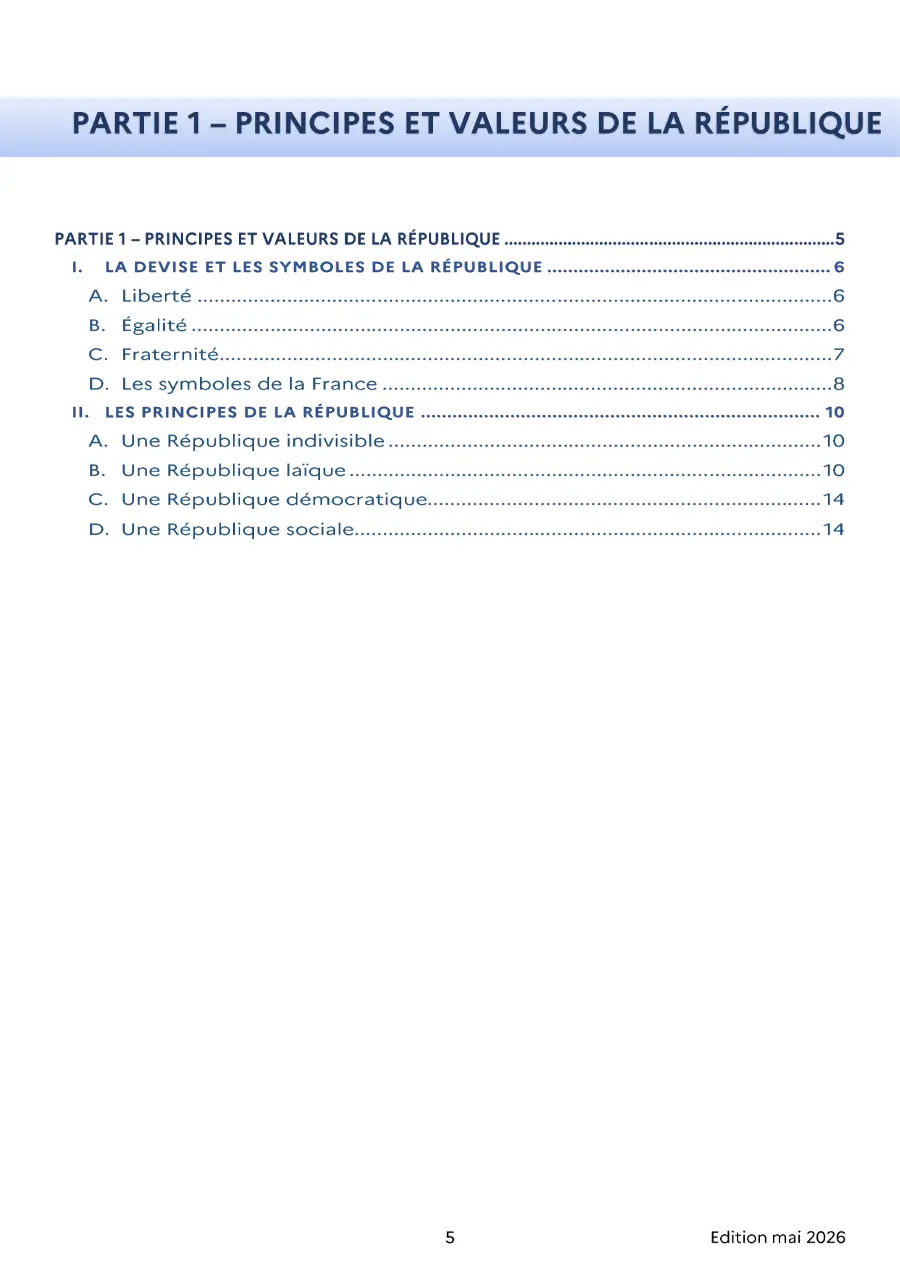
Read these pages in the handbook
This summary follows Part 3 of the Livret du citoyen, pages 24 to 36 of the May 2026 edition. Only the official handbook is authoritative: open a chapter to read the actual pages.
The official questions on “Rights and duties”Practise for free
Frequently asked questions
Is voting compulsory in France?
No. Unlike in some countries, voting is not compulsory in France, but the handbook reminds us that it is an important civic duty: it ensures that elected representatives are legitimate. Respecting election results is also a duty.
What is the difference between a minor offence, a misdemeanour and a serious crime?
It is the seriousness of the offence. A minor offence (contravention), such as speeding or making excessive noise at night, is punished with a fine, not a prison sentence, by the police court. A misdemeanour (délit), such as theft, tax fraud or harassment, is heard by the criminal court and can lead to a prison sentence of up to 10 years. A serious crime (crime), such as murder, rape or terrorism, is heard by the assize court or criminal court and can lead to life imprisonment.
Does a foreign national have to declare their income in France?
Yes. The handbook explains that all residents, not just French people, contribute to funding public services. Any adult living in France who is no longer included in their parents' tax household must declare all their income every year and pay their taxes.
Official sources
- French Ministry of the Interior — Citizen's Handbook (Livret du citoyen), May 2026 edition (official PDF)
- Légifrance — Order of 3 July 2026 on the Citizen's Handbook (Livret du citoyen)
- Légifrance — Order of 10 October 2025 (civic exam syllabus)
This information does not replace that of the prefecture or the exam centre. Citoyen is an independent app, not affiliated with the French Ministry of the Interior.