Key points
- The exam: 40 questions in 45 minutes, at least 32 correct answers (80%).
- 20 to 30 minutes a day is enough if you revise regularly.
- Start with a test to spot your weak topics, then revise one topic at a time.
- Finish with timed mock exams: aim for 36/40 to give yourself a safety margin.
The civic exam does not require you to be an expert in French history. You need to know the main principles, institutions, and rules of life in France, and be able to apply them to real situations. The format is demanding: 40 questions in 45 minutes, and at least 32 correct answers. Eight mistakes, no more.
This four-week plan is designed for 20 to 30 minutes of revision per day. It follows the logic of the Citoyen app: first understand, then practise, then test yourself in real conditions.
Before you start: know your date and your list
Two things will change how you revise:
- Your exam date. If you are not yet registered, check the available sessions near you: this will decide how much time you have.
- Your procedure. The format is the same for everyone, but the official list of questions depends on your procedure: multi-year residence permit (carte de séjour pluriannuelle), resident card (carte de résident), or naturalisation. Revise first the list that applies to you.
If your exam is in less than four weeks, keep the same order but shorten each step: one topic every two or three days, and a mock exam every two days in the last week.
Week 1: take stock and build your foundations
Days 1 and 2 — Assessment. Do a first test without revising. The goal is not to get a good score, but to spot the topics where you lose the most points. Write them down.
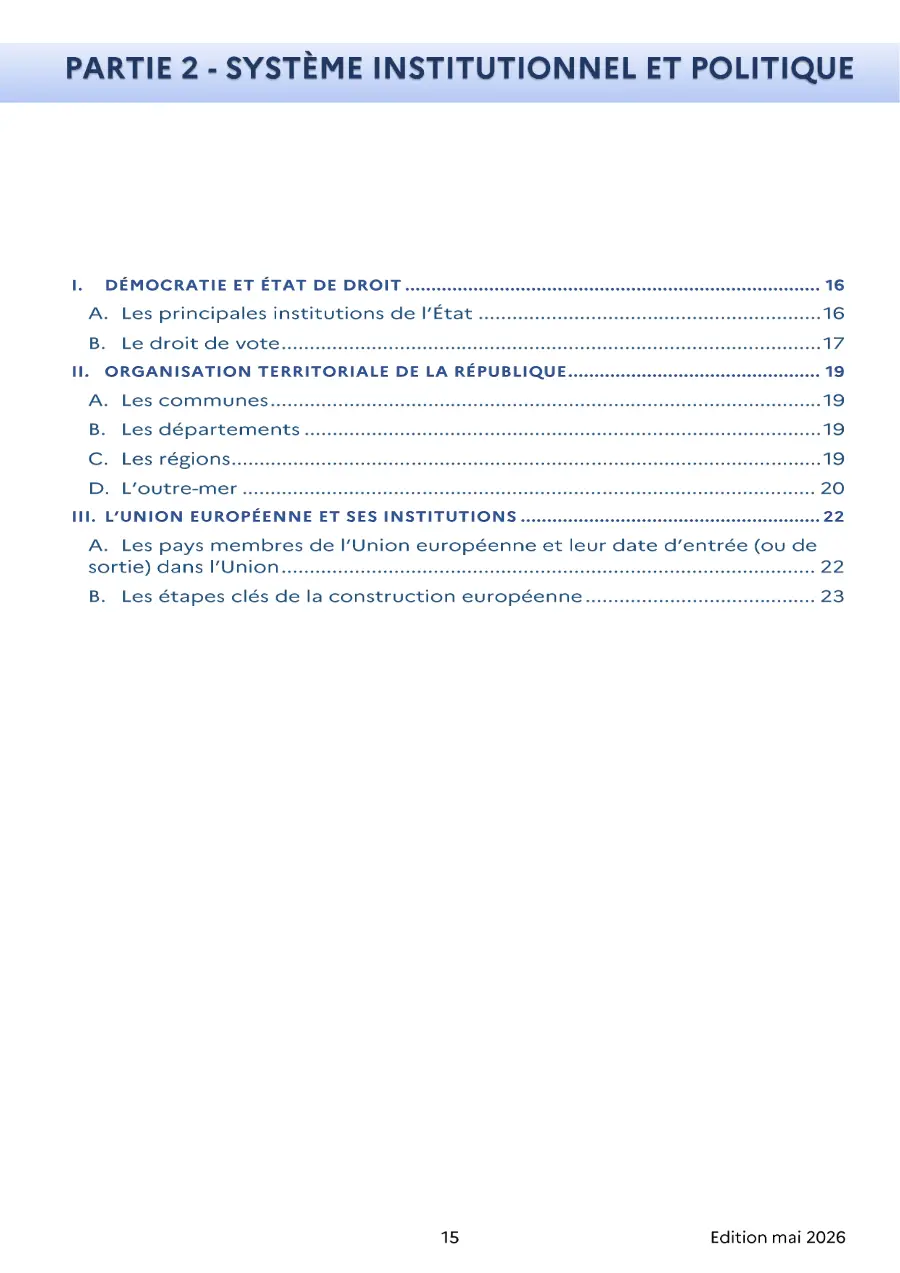
Days 3 to 7 — The principles and values of the Republic. This topic gives meaning to all the others: the motto, the symbols, secularism, equality. Read the relevant part of the Citizen’s Handbook (Livret du citoyen), then practise the questions on this topic. For every mistake, reread the explanation: that’s where you learn the most.
Week 2: institutions and rights
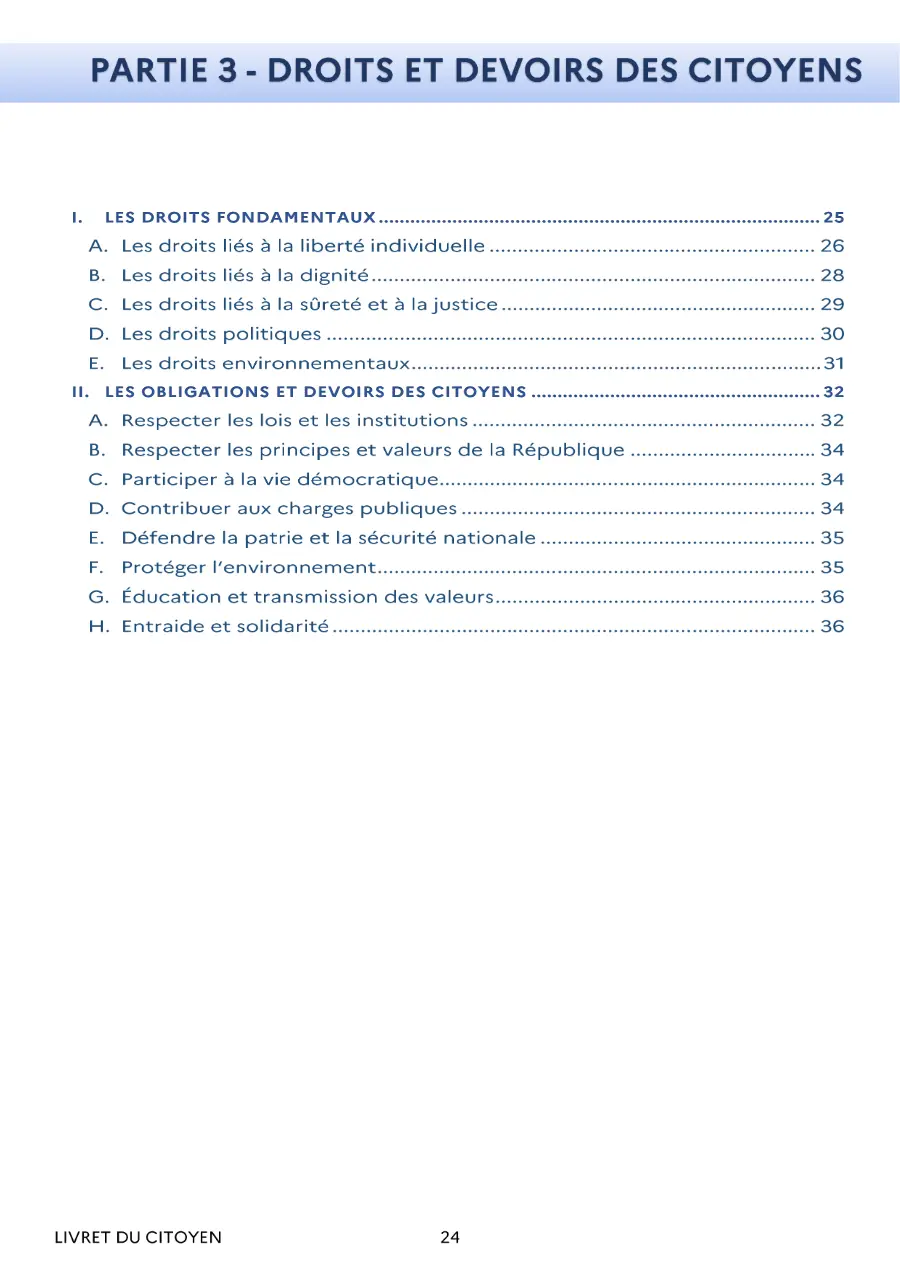
Days 8 to 11 — The institutional and political system. Who votes for laws, who appoints whom, how long do terms last, how does the commune work. This topic has a lot of precise facts: make yourself a summary table (institution, role, how they are chosen, length of term).
Days 12 to 14 — Rights and duties. Fundamental freedoms, but also obligations: obeying the law, paying taxes, sending your children to school. These ideas often come up in the real-life scenarios.
Week 3: history, geography, and daily life
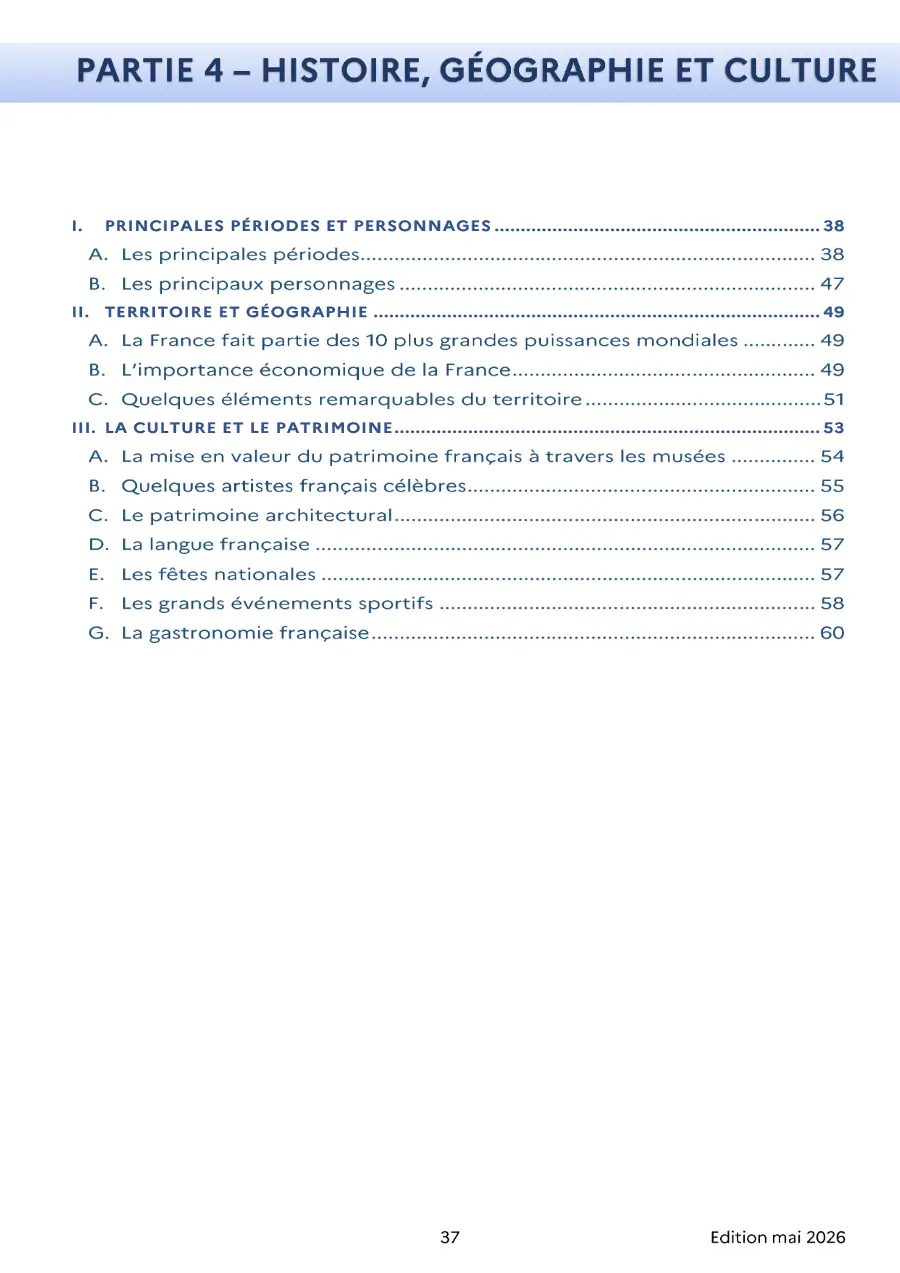
Days 15 to 18 — History, geography, and culture. Focus on the key dates and what they changed: 1789, 1848, 1905, 1944, 1958. Remembering why a date matters helps you remember it.
Days 19 to 21 — Living in French society. Emergency numbers, school, health, work, civil status procedures. These are often common sense questions, as long as you know the French rules.
At the end of the week, take another test and compare it with your day 1 assessment.
Week 4: Real-life scenarios and mock exams
Days 22 to 24 — Real-life scenarios (mises en situation). Part of the civic exam describes a situation from everyday life: at work, at the town hall, at school, at the doctor’s. Here’s the method:
- Identify the principle involved (equality, secularism, respect for the law, using the right institutions).
- Eliminate answers where someone takes justice into their own hands or gives up their rights.
- Choose the answer that follows the rule and goes through the correct people or organisations.
Days 25 to 28 — Mock exams (examens blancs). Take at least three full, timed mock exams without any interruptions. After each one, review all your mistakes. If a topic is still weak, go back to those questions before your next mock exam.
The day before, don’t study any new topics. Review your notes, go over your mistakes, and get some sleep.
How do you know if you’re ready?
You’re ready when you score 36 out of 40 in a mock exam at least twice in a row. The official pass mark is 32, but on the real day, stress, misreading a question, or tiredness can cost you a few points. This safety margin protects you.
If you’re not there yet a few days before the exam, don’t panic: focus on your two weakest topics and on the real-life scenarios (mises en situation), which often score the most points.
Practise for free
Frequently asked questions
How long does it take to prepare for the civic exam?
It depends on your starting level. With 20 to 30 minutes a day, four weeks is usually enough to cover all five topics and do several mock exams. If you are starting from scratch or if French is difficult for you, plan for six to eight weeks.
Do you have to learn all the questions by heart?
No. The knowledge questions come from official lists published by the French Ministry of the Interior (ministère de l'Intérieur), but understanding the idea behind each answer is more effective than memorising isolated answers. This is also what helps you succeed in the real-life scenarios.
What score should you aim for in mock exams?
The pass mark is 32/40. Aim for at least 36/40 regularly in mock exams: tiredness, stress, or misreading a question can cost you a few points on exam day.
Official sources
- Service-public.fr — Civic exam (multi-year residence permit (carte de séjour pluriannuelle), resident card (carte de résident))
- French Ministry of the Interior (ministère de l'Intérieur) — Official lists of knowledge questions
This information does not replace that of the prefecture or the exam centre. Citoyen is an independent app, not affiliated with the French Ministry of the Interior.